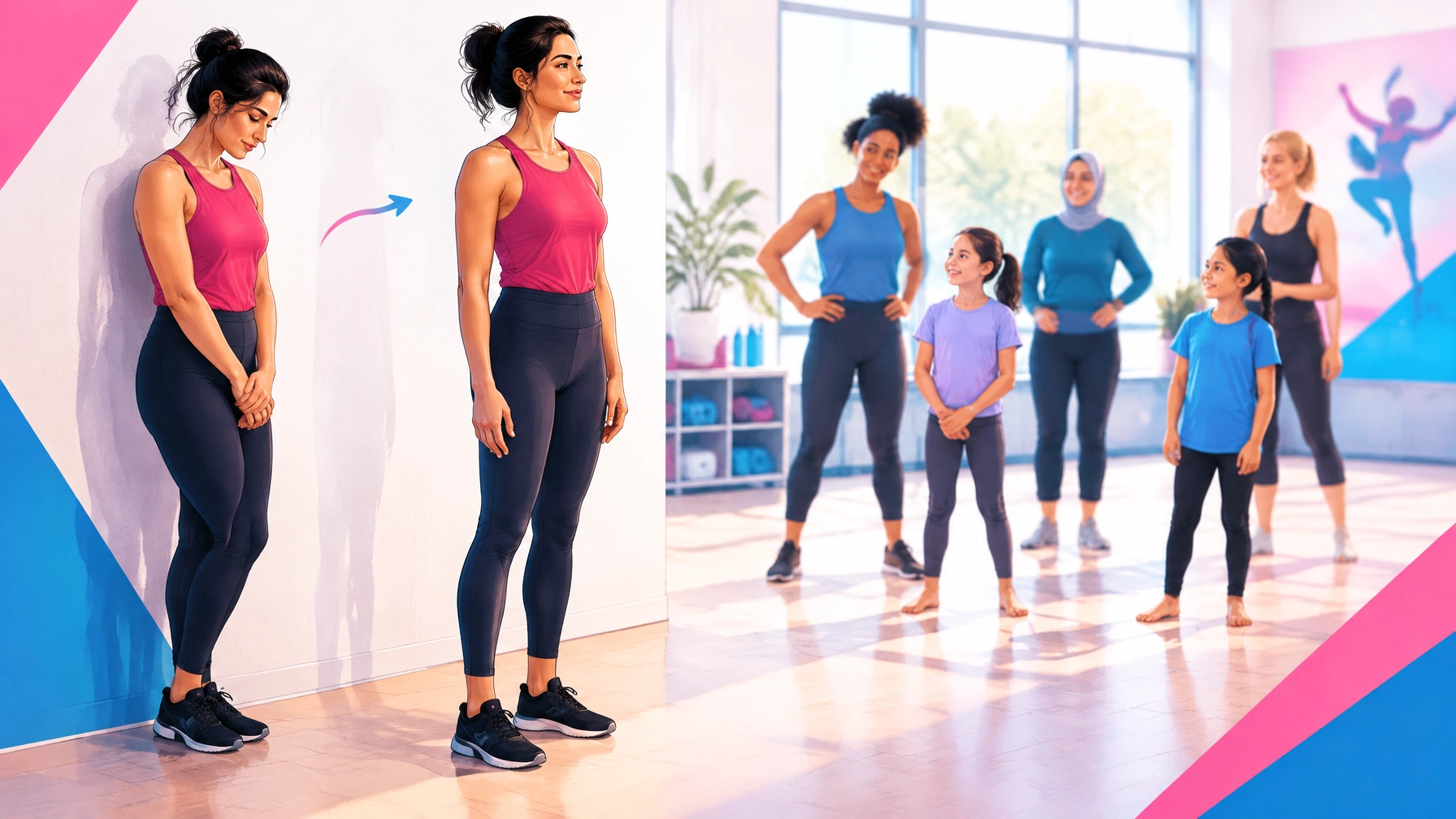
At the start of a first session, you might find yourself near the wall. Arms folded. Shoulders rolled forward. Trying to take up as little space as possible. If that sounds familiar, you are in good company.
Then I invite you to stand tall. Let your shoulders ease back, keep your chin level and feel your feet on the floor. The room can feel different when you do. This isn’t about looking a certain way. It’s about what standing tall tells your own body.
A small change that matters
Posture is a signal you send to yourself, not just to other people. Standing tall can change how you breathe, how your voice comes out and how much of the room you let yourself have.
It isn’t magic. It won’t fix everything, and you don’t have to feel confident before you try it. But it can be a doorway you walk through in two seconds, anywhere, for free. One small reset. One breath. A chance to meet the moment a little differently.
Finding your space in dance
In class, we practise a simple foundation: a long spine, head up, shoulders easy and weight balanced over the feet. Not stiff. Not forced. Just ready to move.
A dancer’s “present” position is really a habit of taking up their space. We practise walking across the floor with our heads up. Then someone might hear, “You look so tall and proud!” For a child, that little moment can make being seen feel more welcome. It’s not about getting every step right. It’s about feeling that you belong on the floor.

You can feel posture in the moments before a performance, too. You enter, take your place and wait for the music with your shoulders back. The way you hold yourself helps carry the mood of the dance. A quiet, graceful piece asks for a different feeling from a lively one.
And something lovely happens when that stage practice comes with you. A dancer who has learned to stand tall in front of an audience may find it slightly easier to do the same in a classroom or meeting room. The stage doesn’t make every other room easy. But it gives you a place to practise being seen.
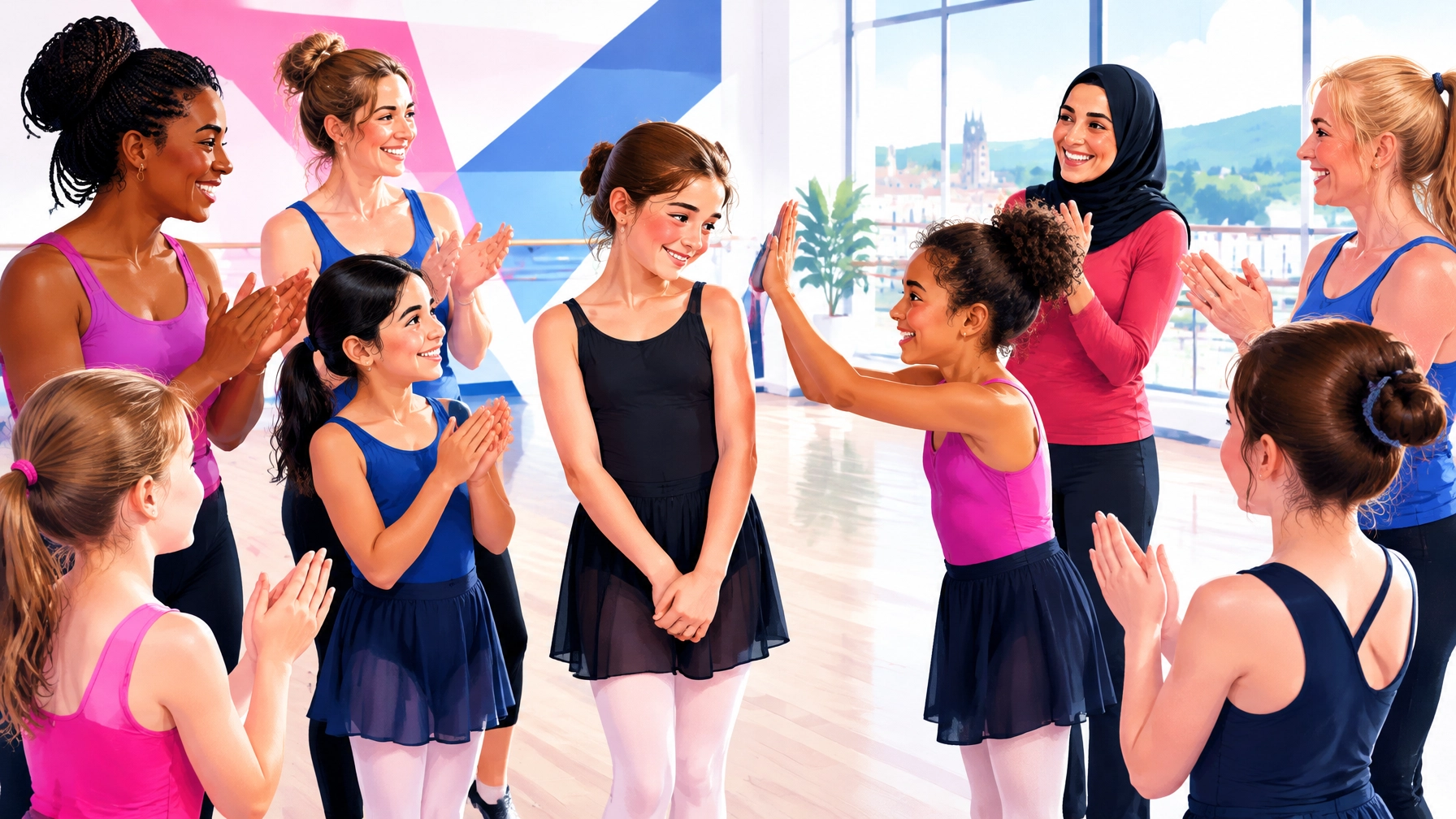
I love those moments of encouragement in class. And I love how we clap each other out at the end of a session. Little things can help people feel welcome as they learn.
A grounded stance in self-defence
Standing tall is one of the simplest tools we practise in self-defence. Feet comfortably apart. Weight centred. Hands up and open. Chin level. Eyes up. The aim is to feel balanced and ready to move, not to look intimidating.
From there, a clear voice can feel easier to find. We practise saying “No”, “Stop” and “Back away” firmly and out loud. We also practise holding our ground and staying tall while a partner moves towards us. It can feel daunting at first. Repetition, clear boundaries and a supportive setting can help the exercise feel less frightening over time.

Self-defence is one useful set of skills among many, and it is never a guarantee of safety. The aim is choice and options, not fighting. We practise skills that can support awareness, boundaries and the ability to make decisions. That’s why I offer self defence instruction for women in West Yorkshire, with activities adapted to the group.
Take a two-second reset with you
Before walking into a room, try this: feet on the floor, spine long, one slow breath, chin level. That’s it. You don’t need a special pose or a perfect mood. Just a moment to notice how you’re standing.
You might use it before an interview, a presentation, a parents’ evening or a hospital appointment. Perhaps before walking to the car in the dark, asking for help or speaking up in a meeting. A child might try it before putting their hand up in class.

Presence doesn’t mean being loud. You can be quiet and still be present. You can feel nervous and still choose to take up your space. There’s no single way to look confident, and there’s no need to pretend you feel something you don’t.
Practising together in West Yorkshire
I work with schools, charities, workplaces and community groups in Huddersfield, Batley and Berry Brow. The same idea can look different in every room. With a nursery group, it might be a “stand tall like a superhero” game. With a corporate team, it could be an exercise in presenting with presence. With a women’s group, we might practise steady, balanced stances.
Activities are adapted to the ages, needs and setting. I bring more than 20 years of teaching experience, and my journey includes competing internationally in Irish dance and earning British, European and World titles. My World Champion West Yorkshire experience is part of my story, but what I love most is seeing people discover what they can do. Nothing is impossible! I love empowering people.
Watching someone suddenly stand taller never gets boring.
As a Martial Arts coach West Yorkshire schools and community groups can book, I adapt every session to the people in the room. And wherever you are, notice how you stand when you’re nervous. Try standing tall for one breath. See what you notice. ✨️
Let’s keep building confidence
If you’d like to talk about a session for your school, charity, workplace or community group, get in touch with me. I’d love to hear what you’re planning.
And if you’d like to keep up with the work I’m doing, visit The Dancing Fighter and sign up for my newsletter. I’d love to keep you in the loop. ❤️
About Rebecca
I’m Rebecca Kane, founder and instructor at The Dancing Fighter. I bring dance, martial arts and motivational speaking together to help women and children build confidence and resilience. After more than 20 years of teaching, seeing someone grow in confidence still inspires me.

#Dance #SelfDefence #WestYorkshire #Huddersfield #Batley #BerryBrow #Confidence