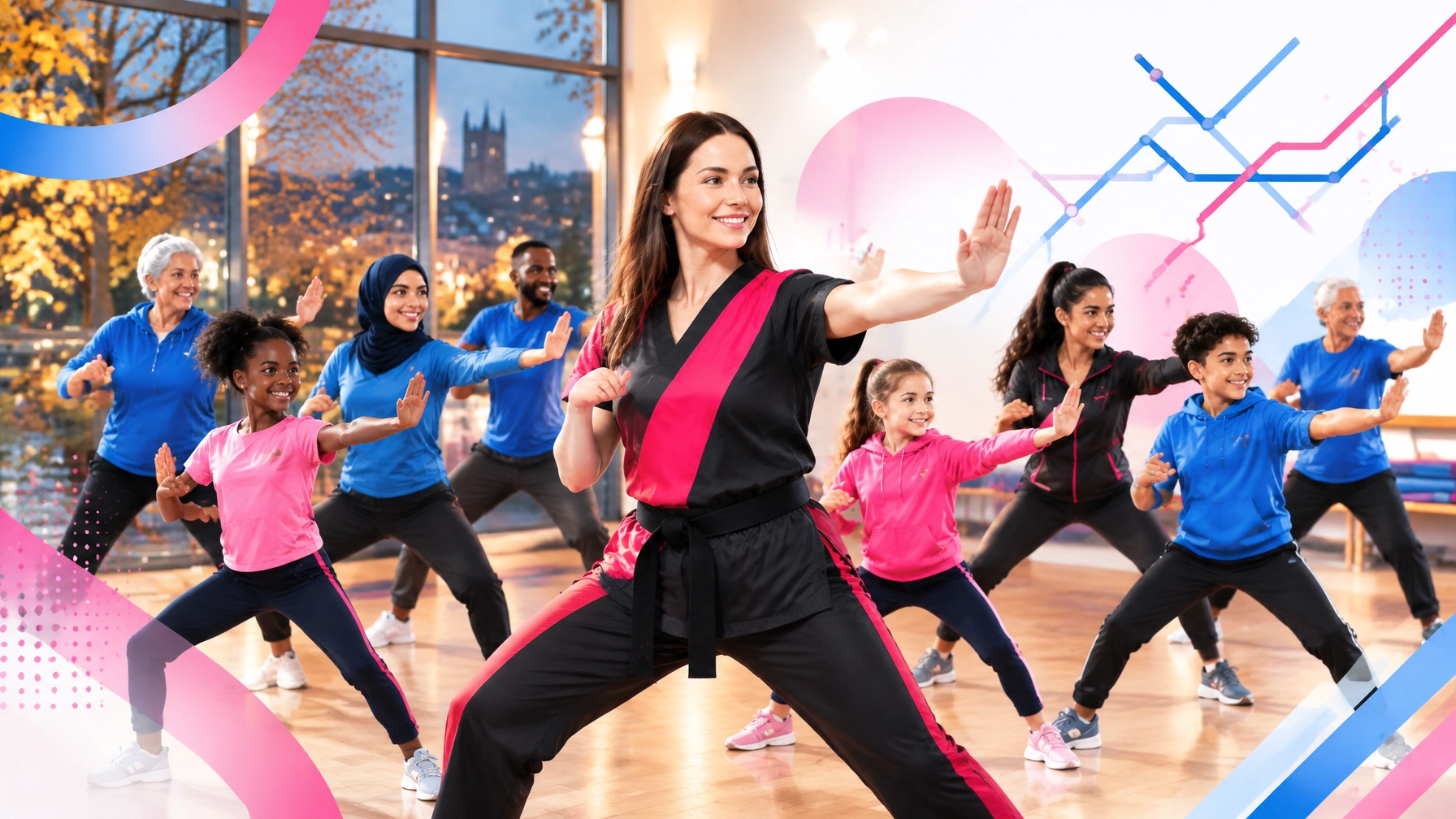
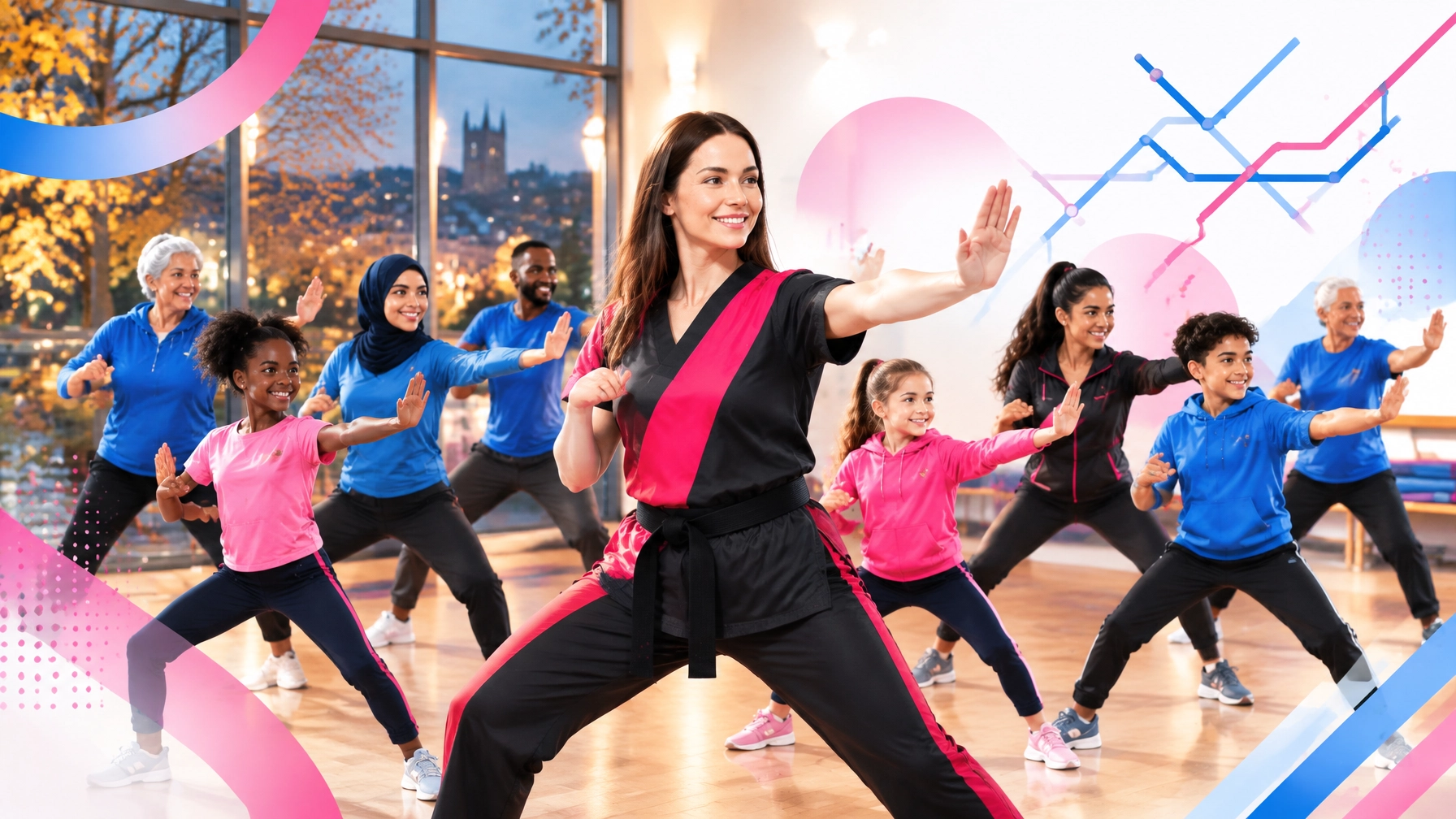
The step goes the wrong way. The rhythm slips. A new self-defence move feels awkward, and nerves whisper, “I can’t do this.”
That moment is not a reason to give up. It is a chance to try again.
I’ve spent more than 20 years teaching, and I love seeing people discover they can keep going after something feels difficult. Confidence doesn’t come from getting everything right first time. It grows when we make mistakes, learn, and find the courage to have another go.
That’s one of the things I love about combining dance and self-defence. Both give us a supportive place to practise recovery. Not perfection. Recovery.
Dance: finding the rhythm after a wobble
In dance, getting something wrong is part of learning. You might miss a beat, muddle a sequence or lose your balance. Then you pause, listen, adjust and try again.
Each repeat offers new information. Maybe you need to slow down. Maybe the next step makes more sense when you change your footing. Sometimes you simply need another go.
For children, that can be a powerful lesson: “I haven’t got it yet” is not the same as “I can’t do it.” For women, dance can offer space to move, experiment and feel more at home in their bodies, without needing to perform perfectly.
The important part is the atmosphere. People need room to learn without being laughed at or rushed. In a supportive class, a mistake is not a verdict. It’s a normal part of practice. One step, one adjustment, one fresh try.
Research into dance programmes has found promising links with aspects of self-confidence and self-efficacy, although findings vary and no single class can promise the same results for everyone. What I see in teaching is the value of practice: learners get the chance to notice their progress, even when it comes in small steps. Read a review of research on dance and aspects of the self.

Self-defence: mistakes can help us find our next move
A first attempt at a self-defence technique can feel unfamiliar. The stance might feel unsteady. The movement may not come naturally. That’s okay. We slow it down, practise safely and focus on what feels clearer the next time.
In a well-supported session, learning is not about winning a fight or proving toughness. It’s about building awareness and practising choices. That might mean using a clear voice, setting a boundary, creating distance, moving towards help or learning a suitable physical technique. The right approach depends on the group and the people taking part.
For children, sessions should be age-appropriate and centred on safety, boundaries and telling a trusted adult when something feels wrong. For women, practice can help make assertive communication and practical options feel more familiar.
And we need to say this clearly: training can offer tools, but it cannot guarantee safety. Responsibility for harmful behaviour belongs to the person causing harm, not to someone who has or hasn’t used a particular technique.
When a learner fumbles a movement, we can treat it as useful information. What felt awkward? What would help? Would it be easier to try slowly, or with a different starting position? We practise, reflect and try again. That process can help someone build belief in their ability to learn and act.

The bounce-back habit: pause, learn, try again
Dance and self-defence look different, but both can help us practise a simple response to setbacks:
- Pause. Take a breath. One mistake does not define the whole session.
- Notice. What happened? What felt difficult, and what went well?
- Adjust. Choose one small thing to change or ask for support.
- Try again. Give yourself another chance, at a pace that feels manageable.
This isn’t about pretending that frustration or nerves disappear. It’s about learning that we can feel them and still take a next step. The first try counts. So does the second. So does asking for help.
For schools, charities and community groups, that can make movement sessions more than an activity. It gives participants a shared way to practise patience, encouragement and perseverance. For companies, it can also be a lively way to explore how teams respond when a task doesn’t go to plan. We learn together, and we get stronger together.
If you’d like to explore this idea further, you can also read “Brave Isn’t Born, It’s Practised…”, where I share more about building everyday courage through practice.
Building confidence across West Yorkshire
I work with groups in West Yorkshire, including in Huddersfield, Batley and Berry Brow. Every school, charity, company and community group is different. So are the people in the room. A welcoming session should make space for different starting points, different needs and different ways of taking part.
I bring more than 20 years of teaching experience, alongside my experience as an international Irish dance and martial arts competitor with British, European and World titles. I know that progress takes practice. Getting something wrong is not a reason to stop; it can be the start of learning what to do next.
If you’re looking for self defence instruction for women in West Yorkshire, or planning dance, martial arts or team-building activities for your organisation, let’s talk about what could suit your group. You can explore my courses and workshops for more information.

Let’s make room to learn
I love empowering people. I love seeing the moment when someone realises that a wobble, a missed step or a nervous first attempt does not mean they have failed. They can pause, learn and come back stronger.
If you’re organising a session for a school, community group, company or charity, get in touch with me. Tell me what you’re hoping to build, and we can start a conversation.
You can also visit my website and sign up to my newsletter to keep in the loop about workshops, performances and the work happening in our communities. I’d love to have you along for the journey. ✨️
Get it wrong. Learn. Try again. Nothing is impossible!
Tags: West Yorkshire, Huddersfield, Batley, Berry Brow, dance, self-defence, self defence instruction for women in West Yorkshire, Martial Arts coach West Yorkshire, World Champion West Yorkshire, women’s confidence, children’s confidence, resilience, schools, community groups, charities, team-building