
Have you ever thrown yourself into a new activity, gone all in for a few days, then felt too tired or busy to keep it up? You’re not alone. Many of us start with a burst of energy. The real change often comes from what we do next: showing up again tomorrow, or next week, and taking one more small step.
I’ve taught dance and martial arts for more than 20 years. I’ve seen how steady practice helps people grow their skills and confidence. Not through pressure to be perfect. Through trying, learning, resting, and trying again.
That’s why I believe consistency beats intensity. A manageable practice you can return to is more useful than a punishing session that leaves you reluctant to come back. Nothing is impossible when we give ourselves room to keep going. ✨️
Dance: small steps add up
Dance can look effortless when you watch a skilled performer. Behind that ease are many small repetitions. A step becomes familiar. A rhythm starts to feel natural. With practice, the movement that once took all your concentration can begin to flow.
The key is not to exhaust yourself trying to get everything right in one go. A few focused minutes can be worthwhile. So can a class where you learn one sequence, practise it, and return to it next time. Rest matters too. It gives your body and mind time to recover and take in what you’ve been learning.
Research into motor learning supports the value of spacing practice out rather than cramming everything into one exhausting session. For example, a study of distributed and massed practice found differences in how adults learned a motor sequence depending on the practice schedule. Dance is its own rich, creative discipline, but the practical idea is simple: repeat skills over time, and give yourself time to reset.
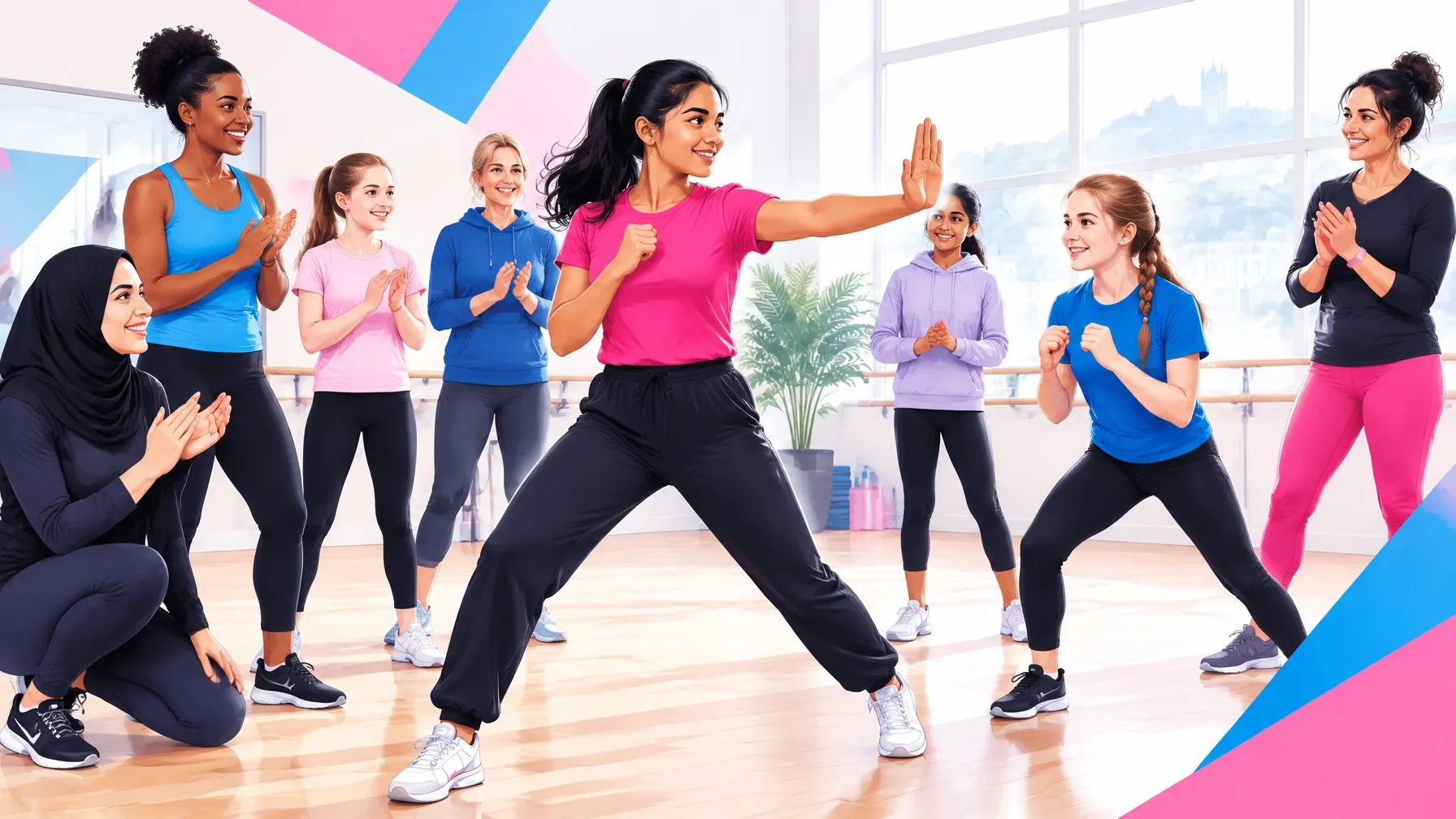
Dance also gives us space to enjoy movement, build coordination, and express ourselves. For children, that might mean finding the courage to try a new step in front of others. For adults, it might mean reconnecting with movement or discovering a new challenge. You don’t need to be naturally talented to begin. You just need somewhere welcoming to start.

I love seeing a student try a movement, wobble, laugh, then try again. That’s progress. It doesn’t need to look dramatic. Consistency is not about being perfect or pushing through pain. It’s about making practice sustainable and returning when you’re ready.
Self-defence: build confidence through repeatable practice
Self-defence skills also need practice. One session can introduce useful ideas, but returning to them helps you become more familiar with your options. That can include using your voice, setting a boundary, creating space, identifying a way to leave, or practising a simple physical response in a controlled, supportive setting.
A good session should help you work at a pace that feels manageable. It should make room for questions and different abilities. It should focus on practical choices, not on expecting anyone to be fearless or physically powerful.
Consistency helps because learning a skill involves more than hearing instructions. You need time to try it, receive feedback, and revisit it. A small number of clear, well-practised responses can be more useful than a long list of moves you have only seen once.
There is some research suggesting self-defence training can support women’s confidence and self-assurance. A 2024 study on a self-defence and self-assertion course reported improvements in some confidence measures among participants. But research has limits, and no class can guarantee safety or predict how someone will react in a difficult situation. Training should offer tools and choices, never blame or false promises.

When I deliver self-defence instruction for women in West Yorkshire, I want people to leave with practical ideas they can keep building on. There’s no need to arrive already confident. We can start with a simple skill and repeat it until it feels more familiar.
Take the practice with you
The habits we practise in a class can remind us of what we’re capable of outside it. Dance teaches us that unfamiliar things can become more manageable one step at a time. Self-defence sessions can give us a chance to practise speaking clearly, setting boundaries, and thinking about options.
None of this means that life will always feel easy. It means we can build skills for meeting challenges, asking for support, and trying again. Confidence isn’t the absence of nerves. Sometimes it’s taking the next step while the nerves are still there.
Want to make practice feel more manageable? Try this:
- Choose a realistic time to practise, even if it’s brief.
- Pick one movement or skill to focus on.
- Notice what feels easier after a few tries.
- Give yourself permission to pause, adapt, or ask for help.
- Celebrate returning to practice, not only getting it right.
Small steps count. One more time tomorrow counts too.
If you’re still wondering whether to start, I’ve written about taking that first step in You Don’t Have to Feel Ready. You don’t have to feel ready before you begin. You can begin gently and build from there.
Growing together across West Yorkshire
Across Huddersfield, Batley, Berry Brow, and the wider West Yorkshire community, schools, charities, workplaces, and community groups bring people together in all sorts of ways. Each group has its own needs. Each person has their own starting point.
A dance or self-defence workshop can give people a chance to practise together, encourage one another, and learn in a supportive environment. A child might discover the joy of mastering one new movement. A woman might try using her voice with confidence. A team might learn how to communicate and work together through a shared challenge.
As a Martial Arts coach West Yorkshire groups can work with, I offer workshops and courses for schools, community groups, companies, and women. You can find out more about courses and sessions, including dance workshops, martial arts, self-defence, and team-building.
I’m proud of my journey as an international Irish dance competitor and a World Champion West Yorkshire instructor. But what means the most to me is seeing people return, practise, and recognise their own progress. I love empowering people. That’s why I keep showing up.
Your next step
If you’re looking for a session for yourself, your school, your workplace, or your community group, I’d love to hear from you. Get in touch and tell me what you’re looking for. We can talk about what might work for your group.
And if you’d like to follow along with the work I’m doing, visit The Dancing Fighter and subscribe to my newsletter. I’d love to keep you in the loop. ❤️
About the author
I’m Rebecca Kane, founder and instructor at The Dancing Fighter. I have more than 20 years of teaching experience and have competed internationally in Irish dance, earning British, European, and World titles. I bring martial arts, dance, and motivational speaking together to help women and children build resilience and confidence.

Tags: West Yorkshire Huddersfield Batley Berry Brow Dance Self-defence Women’s confidence Children’s confidence Resilience Schools Community groups Team-building World Champion West Yorkshire