Let's be honest, parenting doesn't come with a manual. And when it comes to raising confident, resilient kids who understand their own worth? That can feel like navigating uncharted territory!
But here's the good news: teaching your children about boundaries and building their resilience doesn't have to be complicated. In fact, it can be one of the most rewarding parts of your parenting journey. ✨
After years of working with children through movement, martial arts, and dance at The Dancing Fighter, I've seen firsthand how these skills transform young lives. Kids who understand boundaries grow into confident teenagers. Resilient children become unstoppable adults. And it all starts with you, their biggest role model.
So grab a cuppa, and let's dive into five practical steps you can start using today!
Why Boundaries and Resilience Matter for Kids
Before we jump into the how, let's talk about the why.
Boundaries teach children that their feelings, bodies, and opinions matter. They learn to say "no" when something doesn't feel right. They understand that respecting others starts with respecting themselves.
Resilience? That's the superpower that helps kids bounce back from setbacks. It's what keeps them going when things get tough. It's the inner strength that says, "I can try again."
Together, these skills create a foundation for emotional wellbeing, healthy relationships, and lifelong confidence. And trust me, nothing beats watching a child discover their own inner strength!

Step 1: Be the Example They Need
Here's the truth: kids are always watching. They notice how you handle stress, how you say no to things that drain you, and how you stand up for yourself.
Want your children to set healthy boundaries? Show them how it's done!
Practical ways to model boundaries:
- Explain your decisions out loud. "I'm going to rest this afternoon because my body needs it."
- Show them it's okay to decline invitations. "We can't make it to that party, and that's alright."
- Use calm body language when setting limits. Eye contact, steady voice, relaxed shoulders.
In martial arts and dance, we teach children to hold their ground with confidence. But that lesson starts at home. When you demonstrate healthy boundary-setting, you give your child permission to do the same.
I love seeing parents embrace this! It's not about being strict, it's about being authentic. And kids can spot authenticity a mile away. ❤️
Step 2: Communicate Clearly and Consistently
Confusion is the enemy of confidence. When boundaries shift depending on the day or the caregiver, children don't know where they stand.
Consistency is everything.
Here's how to nail clear communication:
- Use simple language your child understands. Skip the lengthy explanations.
- Apply the same rules across different situations. If screen time ends at 7pm, it ends at 7pm, whether it's Tuesday or Saturday.
- Stay calm when delivering consequences. Regulate your own emotions first.
This is something we practise constantly at The Dancing Fighter. In every class, the rules are clear. Children know what's expected. And because of that consistency, they feel safe to express themselves, take risks, and grow.
The same principle applies at home. When children know the boundaries aren't going to shift beneath their feet, they can relax and focus on being kids.

Step 3: Validate Their Feelings First
This one's a game-changer, and it's something many parents overlook.
Before you enforce a boundary, acknowledge how your child feels. Let them know their emotions are valid, even if their behaviour isn't.
Try this approach:
Instead of jumping straight to "Stop that right now," try:
"I can see you're really frustrated that playtime is over. It's hard to stop when you're having fun. But it's time for dinner now."
See the difference?
You're not giving in. The boundary stays firm. But your child feels heard and understood. This builds emotional intelligence and teaches them that feelings aren't something to hide or be ashamed of.
In our classes, we create space for children to express themselves through movement. Dance lets them release big emotions. Martial arts teaches them to channel energy productively. But it all works because they feel safe and supported first.
Create that same safe space at home. Let your kids talk about boundaries without fear of judgement. Ask questions. Listen more than you speak.
Step 4: Offer Choices Within the Boundaries
Nobody likes being told what to do all the time, especially kids! Giving children choices within your set boundaries helps them feel empowered and teaches problem-solving skills.
Here's what this looks like in action:
Instead of: "Put your toys away now."
Try: "Would you like to put your toys away before or after you brush your teeth?"
Instead of: "Stop running inside."
Try: "We walk inside, but you can run as much as you want in the garden. Which do you prefer?"
This technique, sometimes called the "Creative Yes", keeps you in control while giving your child a sense of agency. It's brilliant for building independence and reducing power struggles.
At The Dancing Fighter, we use this approach constantly. Children choose which movements to practise. They decide how to express themselves within the structure of the class. The result? Kids who feel ownership over their learning and development.
Nothing is impossible when children believe they have a voice!

Step 5: Follow Through, Every Single Time
This is where the magic happens. And yes, it's also the hardest part.
When a boundary is crossed, there needs to be a consequence. And that consequence needs to happen consistently: even when you're exhausted, even when it's inconvenient.
Why does this matter?
Because children learn through cause and effect. When they see that their actions have predictable outcomes, they start making better choices. This builds resilience because they understand that setbacks are part of life: and they can handle them.
Tips for following through:
- Keep consequences logical and connected to the behaviour.
- Stay calm. Shouting undermines your authority.
- When they do respect boundaries, celebrate it! Positive reinforcement goes a long way.
I've watched countless children develop this cause-and-effect understanding through martial arts training. They learn that practice leads to progress. They discover that effort matters. And they build the resilience to keep going when things get challenging.
You can reinforce these same lessons at home by staying consistent with consequences and celebrating wins: big and small.
Movement as a Tool for Boundaries and Resilience
Here's something I'm truly passionate about: movement training is one of the most powerful ways to help children develop boundaries and resilience.
Why?
- Martial arts teaches body awareness, self-control, and standing your ground.
- Dance encourages self-expression, emotional release, and confidence.
- Physical activity builds mental strength alongside physical strength.
When children learn to control their bodies, they learn to control their emotions. When they push through a tough workout, they discover they're capable of more than they thought.
This is what we do at The Dancing Fighter. We combine the power of dance and self-defence to help children (and women!) build confidence from the inside out. It's not just about learning moves: it's about discovering your own strength.

You've Got This, Parent!
Teaching kids boundaries and building resilience isn't a one-time conversation. It's a daily practice. Some days will be easier than others. And that's completely okay.
Remember:
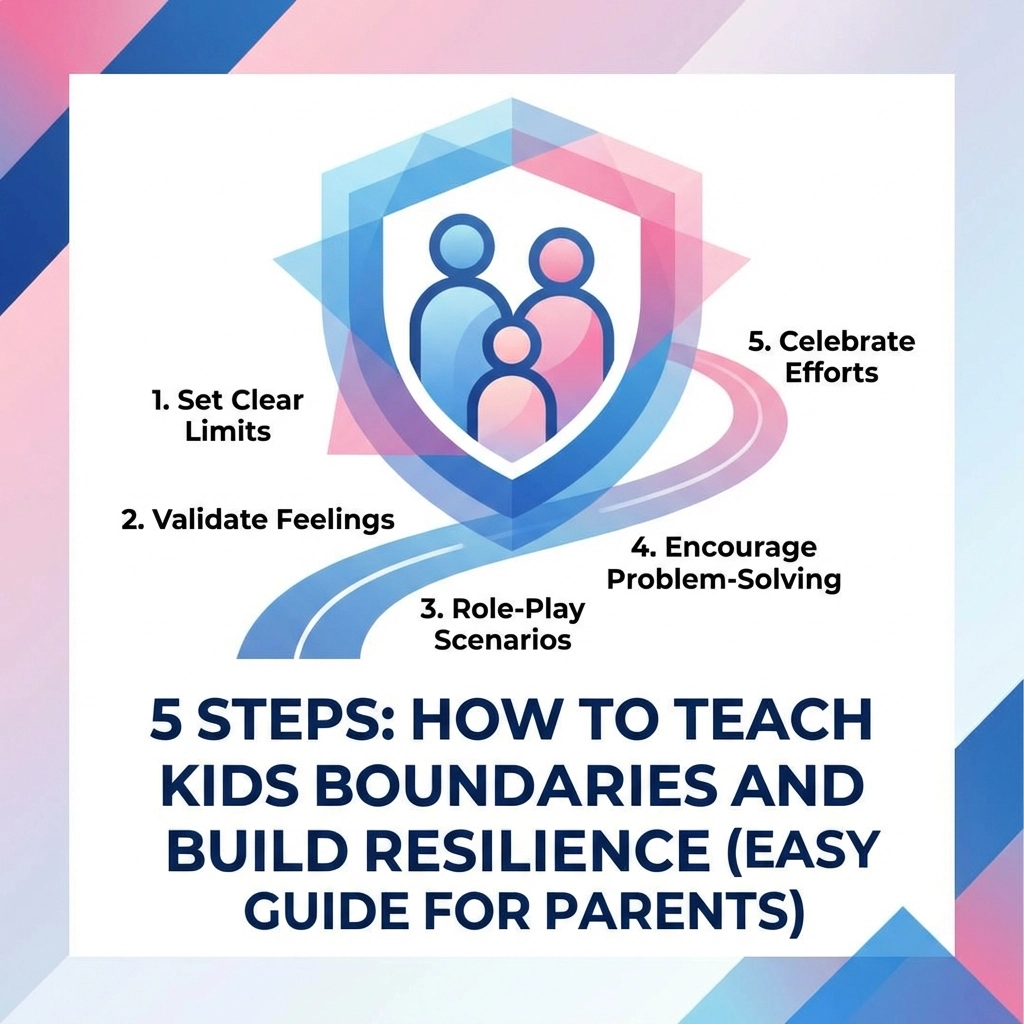
- Model the behaviour you want to see
- Communicate clearly and consistently
- Validate feelings before enforcing limits
- Offer choices within boundaries
- Follow through every time
These five steps will help you raise confident, resilient children who understand their worth and aren't afraid to stand up for themselves.
And if you're looking for extra support? Movement training can be an incredible addition to your child's development. Check out our courses to see how The Dancing Fighter can help your family thrive.
Here's to raising the next generation of confident, unstoppable kids! ✨